Healthtech Investors
Healthtech is one of the most actively funded categories on CapLink, with 149 verified investors currently backing companies in the space.
The mix is led by VC, PE/Buy-Out and Business Angel, alongside 6 other investor types. Deal coverage spans Pre-Seed through PE/Buy-out, with the largest concentration at Seed.
Investor headquarters cluster in United States, Canada, Germany, France and India, with activity across 194 countries in total. Ticket sizes range from roughly $5K to $105M, covering early angel cheques through to growth-stage rounds.
Use the pre-filtered database below to explore every Healthtech investor on CapLink, or sign up to unlock contact details, ticket sizes and detailed investment criteria.
Healthtech investor database
149 investors matched for Healthtech. Sign up to unlock contact details and full profiles.
| Investor |
|---|
 HealthTech Capital is a membership organization of accredited angel investors, healthcare systems, and venture/corporate investors focused on early-stage healthtech startups since 2010. |
 We invest in technology-centric solutions that expand access, quality and efficiency to healthcare across emerging markets. |
ALIVE is a pioneering mid-to-late stage HealthTech fund based in Israel, dedicated to accelerating the growth of innovative healthcare technologies. By leveraging an exclusive ecosystem of strategic partners—including leading hospital chains, health maintenance organizations (HMOs), and financial institutions—ALIVE supports portfolio companies in their clinical and commercial expansion. This collaborative approach enables ALIVE to deliver a capital-efficient model for HealthTech investors, offering high rewards with relatively low
over a condensed investment journey of 3-5 years.
The fund focuses on companies with the highest potential to improve the quality of life for millions of people, emphasizing in-depth understanding of clinical workflows, proven hands-on guidance, and product-market fit validation under challenging health economics and evolving market trends. |
 Esplanade Healthtech Ventures is a venture capital firm specializing in pre-seed rounds through pre-ipo with initial investments focused on seed and series A rounds, early venture, mid venture, and high-growth companies. It invests in health care technology, AI software that directly impacts patients or healthcare professionals, while excluding invasive devices and biotech. The firm invests primarily in companies located in Canada, the United States, and Israel that target markets in North America and the European developed Market. Esplanade Healthtech Ventures was founded in 2019 and is headquartered in Montréal, Canada, with additional offices in Toronto, Canada, and Vancouver, Canada. |
KPTL is a pioneer Venture Capital firm in Brazil, formed by the merger of A5 Capital Partners and Inseed Investimentos, focusing on high-impact innovation across sectors like Agtech, Fintech, and Healthtech. |
 We invest in early stage (Pre Seed and Seed) companies building the future in Fintech, Edtech, Healthtech, Logistics, AI/ML and Climatetech. |
 TRGC is a venture capital firm specializing in early-stage investments in technology-driven startups. With a focus on innovation and scalability, TRGC partners with entrepreneurs to build market-leading companies. The firm has a history of successful exits and a diverse portfolio across various sectors.
TRGC's investment philosophy emphasizes a hands-on approach, providing strategic guidance and operational support to its portfolio companies. The firm's areas of focus include artificial intelligence, fintech, and healthtech, aiming to drive transformative change in these industries. TRGC differentiates itself through its extensive network, deep industry expertise, and commitment to fostering long-term partnerships with founders.
Geographically, TRGC primarily invests in North America and Europe, seeking opportunities in dynamic and rapidly evolving markets. |
 CITES (Spanish acronym for Centro de Innovación Tecnológica Empresarial y Social) (Social and Business Technology Innovation Hub) belonging to Sancor Seguros Group, is an investor of early- stage venture capital with capabilities to incubate and accelerate science and technology-based startups. It accompanies startups by offering support in business, management, intellectual property and technology, and provides an exclusive incubation space with access to common laboratories fully-equipped with nanotechnology, biotechnology, engineering, and ICT for up to two years. It also offers support from the corporate areas of Sancor Seguros Group.
CITES invests in verticals such as Insurtech, Fintech, ICT, Edutech, Agtech, Pharma, Healthtech and Life Science. |
 Mantis VC is an early stage technology investment firm supporting the most innovative companies across enterprise software, AI / ML, cloud and data infrastructure, healthtech, cybersecurity, gaming and other emerging technologies. |
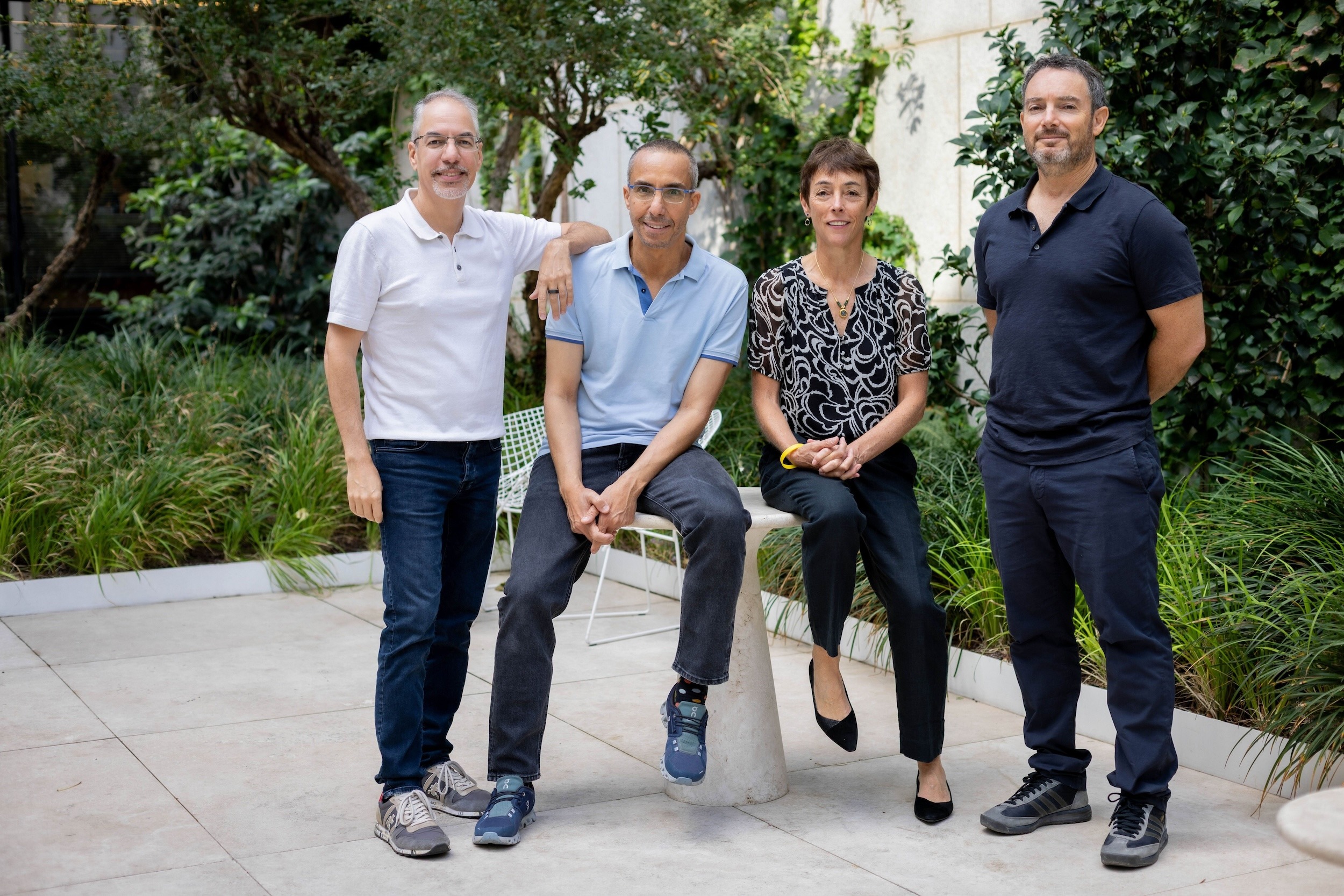 83North is a global venture capital firm with over $2 billion under management, investing in European and Israeli entrepreneurs to build global businesses. Founded in 2006 and formerly known as Greylock IL, the firm has invested in 90 companies, achieving 33 exits, including 14 unicorns. Their portfolio spans various sectors, including fintech, mobility, healthtech, marketplaces, SaaS, and security.
83North's investment approach focuses on early-stage and growth capital investments, typically committing between €1.5 million and €3 million per investment, primarily in Series A and B funding rounds. The firm operates from offices in London and Tel Aviv, providing support across Europe, Israel, and the United States. Notable portfolio companies include IronSource, iZettle (acquired by PayPal), Just Eat, Wolt, and Via Transportation. |
 AHG Lab is a venture capital firm specializing in pre-idea to seed stage, startups, early-stage, middle stage, later stage, incubation, growth capital and pre-seed. The firm is sector-agnostic. The firm seeks to invest in AI-enabled, accelerator, cleantech, e-commerce, edtech, fintech, foodtech, fund, healthtech, HR tech, marketing agency, ops and services, proptech+, social network, techdev and travel tech. The firm seeks to invest in the Philippines, Middle East, Southeast Asia and beyond. AHG Lab is headquartered in Makati City, Philippines with additional offices in Singapore, Singapore and Abu Dhabi, United Arab Emirates. |
Accelmed is a private equity firm specializing in the healthcare technology sector. They focus on acquiring and growing commercial-stage HealthTech companies, with a particular emphasis on medical devices, tools and diagnostics, digital health, and tech-enabled services. Their approach involves working closely with management teams to enhance operations, update product portfolios, and revamp commercial organizations.
Accelmed has a track record of successful investments and exits, demonstrating their commitment to building market-leading healthtech companies. |
 AlbionVC is a long-term venture capital partner specializing in early-stage software, healthcare, and deeptech. Established in 1996, the firm supports visionary founders from inception through successive growth rounds, with a strong focus on the UK technology ecosystem and European healthtech. |
 We invest in Consumer , SaaS, CleanTech, HealthTech |
 EQx Fund is a venture capital firm dedicated to investing in early-stage technology startups that are poised to make a significant impact in their respective industries. Established in 2015, the firm has built a reputation for identifying and nurturing innovative companies with high growth potential. EQx Fund's investment philosophy centers on providing not only capital but also strategic guidance to help entrepreneurs scale their businesses effectively.
The firm focuses on sectors such as artificial intelligence, fintech, and healthtech, aiming to support startups that leverage technology to solve complex problems. Notable achievements include leading Series A funding rounds for several high-profile startups, resulting in successful exits and substantial returns for investors. EQx Fund differentiates itself through its hands-on approach, offering portfolio companies access to a network of industry experts and potential partners.
This approach has been instrumental in accelerating the growth trajectories of its investments. |
HATCHER+ is a venture capital firm that specializes in providing early-stage funding to innovative startups across various industries. With a focus on leveraging technology and data-driven insights, HATCHER+ aims to identify and support high-potential companies poised for rapid growth. The firm's investment philosophy centers on partnering with visionary entrepreneurs to build scalable and sustainable businesses.
HATCHER+ has a track record of successful investments in sectors such as fintech, healthtech, and edtech, demonstrating its commitment to fostering innovation and driving economic development. The firm's team comprises experienced professionals with diverse backgrounds in entrepreneurship, technology, and finance, enabling them to offer strategic guidance and resources to portfolio companies. HATCHER+ differentiates itself through its hands-on approach, providing not only capital but also operational support to help startups navigate challenges and achieve their growth objectives.
This comprehensive support model has contributed to the firm's reputation as a valuable partner for emerging companies seeking to make a significant impact in their respective markets. |
.png/:/rs=h:147,cg:true,m/qt=q:95) HGM, LLC is a private equity firm specializing in platform acquisitions, buyouts, turnaround, divestitures, middle market, and mature investments. It typically invests in transaction processing business including business process outsourcing, knowledge process outsourcing, and business process services; big data mining and analytics; energy; proppants and oil and gas services; natural resources; waste to energy; assets and renewable; renewable energy; FinTech, InsurTech, HealthTech, Tech-For-Good, Esports and Gaming, financial services; banks; retail; healthcare; and telecommunications sector. It holds controlling interests in technology-enabled service companies. The firm seeks to invest in the Americas, United States, Europe, United Kingdom, Middle East, Brazil, Russia, Asia, India, China, and other countries. It seeks to control 100 percent stake in its portfolio companies. HGM, LLC was founded in 2001 and is based in Santa Monica, California. |
 We invest in Saas, fintech, healthtech, web3 |
 Aescuvest is a European deal-by-deal VC boutique specializing in Healthtech investments, focusing on areas such as remote monitoring, personalized medicine, and AI in healthcare. |
 JumpStart is a nationally recognized entrepreneur support organization that equips tech startups and small businesses with the skills, services, and capital needed to grow. Based in Ohio, they provide venture capital from seed to Series A, alongside specialized accelerators for software and healthtech innovation. |
 We invest in healthcare and medical companies that are validated by our global community through contests and on stages around the US and beyond in 35 cities so far. Medical Devices, MedTech, DIgital Health, AI, HealthTech and all areas of medical innovation are of interest to us. |
 AddVenture is an international venture capital fund with a sector-focused strategy.
Fund's investment range is $1–20M.
The fund’s investment focus:
- Home & Local Services
- FoodTech
- HealthTech
What are we looking to fund:
Horizontal marketplaces
Half of the global workforce does manual freelance work,
we look for companies that help people market their skills and provide them with more work opportunities:
* Home & local services marketplace
* SaaS for workforce management
Vertically integrated services
In some verticals customers look for a trustworthy brand that they can rely on for their home needs. A company that controls the quality and can always find a right person for the job:
* Cleaning
* Beauty
* Storage
* Laundry & Dry-cleaning
* Legal |
 We invest in consumer focused businesses in the space if healthtech, fintech, gen AI, D2C brands, creators economy, health and wellness, ecommerce, marketplace, circular economy and more. |
 We invest in blue economy startups that span a broad spectrum of sectors such as fintech, IoT, web3, SaaS, blockchain, AI, machine learning, AR/VR, biotech, robotics, clean energy, sustainable agriculture, edtech, healthtech, insurtech, proptech, quantum computing, nanotechnology, cybersecurity, e-commerce, mobile apps, cloud computing, 5G, wearables, gaming, digital health, genomics, drones, space tech, smart cities, and autonomous vehicles, seeking out the most innovative and transformative solutions within these domains |
 Momentum 6 is a venture capital firm dedicated to investing in early-stage technology companies that are poised to disrupt their respective industries. Founded in 2015, the firm has built a reputation for identifying innovative startups with high growth potential and providing them with the resources and guidance needed to scale successfully. Momentum 6's investment philosophy centers on partnering with visionary entrepreneurs who are developing groundbreaking solutions in sectors such as artificial intelligence, fintech, and healthtech.
The firm takes an active role in its portfolio companies, offering strategic support, operational expertise, and access to a vast network of industry connections. This hands-on approach has enabled Momentum 6 to foster a collaborative environment that accelerates the growth of its investments. Notable achievements include leading Series A funding rounds for several high-profile startups, resulting in successful exits and significant returns for its investors.
The firm's areas of focus include early-stage investments in technology-driven companies, with a particular emphasis on sectors that are experiencing rapid innovation and disruption. Key differentiators of Momentum 6 include its deep industry expertise, a strong track record of successful exits, and a commitment to fostering long-term partnerships with entrepreneurs. The firm's geographic focus is primarily on North America, with a keen interest in emerging markets that present unique growth opportunities.
Momentum 6 maintains an active presence on LinkedIn, where it shares insights, updates, and thought leadership content related to the venture capital landscape. |



Understanding Healthtech investors
What are Healthtech investors, and what do they look for?
The first question a healthtech investor asks is who pays, and the answer determines everything that follows. A product sold to a hospital, to an insurer, to an employer or directly to a patient is four different companies with four different sales cycles, and investors specialise accordingly. Founders who describe their market as healthcare rather than naming the budget holder tend to lose the room early. Regulatory classification is the next filter. Whether your product is a medical device, clinical decision support, or a wellness tool making no clinical claim changes your cost and timeline to market by years. Investors want to see that you have taken a considered position on this, with proper advice behind it, rather than hoping to stay below a threshold you have not tested. Evidence is the third pillar and the most underestimated. Healthcare buyers do not purchase on a demo. They purchase on outcomes data, preferably published, preferably not generated by you alone. Expect questions about what evidence you hold, what evidence the buyer requires, and how long the gap between the two takes to close. Integration reality closes the list. Clinical software lives or dies on whether it connects to the systems already installed, and the incumbents controlling those systems have limited enthusiasm for making that easy. A credible plan here, whether through standards, partnership, or a deliberate decision to sit outside the patient record entirely, separates companies that scale from companies that pilot indefinitely.
Why Healthtech is attracting investor interest
Demographics do most of the argument here. European populations are ageing, chronic disease prevalence is climbing, and the clinical workforce is shrinking relative to demand. Health systems cannot hire their way out of that gap, which leaves technology as one of the few available levers. Investors find this persuasive precisely because it does not depend on a trend continuing. It depends on arithmetic that is already fixed. The pandemic accelerated something more specific. Reimbursement pathways for remote consultation and monitoring appeared in several European systems considerably faster than anyone expected, and institutional resistance to digital delivery weakened in a way that has not reversed. Once a payment pathway exists, a market exists, and categories that had been stuck for a decade became fundable within about two years. Sustained budget pressure has done the rest. Public health systems across Europe are financially strained, which makes them unusually receptive to anything demonstrably cheaper and unusually slow to actually buy it. Investors have learned to underwrite that contradiction rather than be surprised by it, and the good ones will ask how you plan to survive the gap between enthusiasm and procurement. There is a data argument too. European health systems hold longitudinal population data of a depth that is rare globally, and the frameworks governing access, while restrictive, are becoming clearer. Companies that can operate inside those constraints hold a research asset that competitors elsewhere cannot easily replicate.
Which funding stages Healthtech investors are active at
Stage behaviour in healthtech is dictated by regulatory and evidence milestones rather than by revenue, which makes it look unusual against software norms. Pre-seed and seed rounds fund a team, a clinical hypothesis and usually a first study or a regulatory strategy. Investors at this stage are underwriting the founding team's clinical credibility as much as anything else, and a practising clinician or a serious academic on the founding team materially changes how a round is received. Series A typically requires evidence rather than scale: a completed study, a regulatory clearance, or a paying institutional customer that survived procurement. This is where a large share of healthtech companies stall, because the evidence generation takes longer than the runway raised at seed. Planning the seed round against the evidence milestone rather than against a revenue target is the single most useful adjustment founders can make. Series B and beyond turn on repeatability of the sales motion into institutional buyers, which in European healthcare means surviving tender processes and reference-selling between systems. Investors want proof that the second and third customer took less time than the first. Growth-stage capital in European healthtech is thinner than in software, and later rounds frequently involve strategic investors, health system venture arms and specialist funds from the US. Reimbursement-backed models attract a distinct set of growth investors who underwrite payer relationships rather than user growth.
Typical check and round sizes in Healthtech
Numbers here are less transferable than in most sectors, because a company pursuing a medical device classification and one selling an unregulated workplace wellbeing product have almost nothing in common financially, despite sharing the healthtech label. The dominant variable is the regulatory and evidence path. A clinical study costs real money and takes real time, and it is a fixed obligation rather than something that flexes with growth. Rounds in regulated healthtech are therefore sized against a specific milestone: completing a trial, achieving a clearance, or reaching a reimbursement decision. Founders should present the raise in exactly those terms, since investors are underwriting the milestone rather than the runway. The second variable is the length of the sales cycle. Selling into public health systems in Europe involves procurement processes that run considerably longer than commercial software cycles, and the capital required is largely a function of how many of those cycles you must survive before revenue arrives. Underestimating this is the most common cause of a bridge round. Unregulated or lightly regulated products, including workplace health, wellbeing and administrative tooling, raise on conventional software patterns and should be benchmarked against software rather than against healthcare. Where you need real comparables, look at recent European rounds in your specific regulatory class and payer model. Aggregate healthtech figures blend device companies, care delivery businesses and software into an average that describes none of them.
Types of investors active in Healthtech
Funds dedicated to health technology, usually staffed with people who have sold into health systems before. Their value is knowing which procurement doors actually open and how long a reimbursement decision really takes. They will also push back hardest on an evidence plan they consider optimistic, which is uncomfortable and usually correct.
Investors from the pharmaceutical and device world who are comfortable with regulatory timelines and clinical trials in a way that software funds are not. They fund longer, more capital-intensive paths, but they expect scientific rigour, and they will bring clinical advisers into diligence who read your data critically.
Hospitals, provider groups and insurers with investment vehicles. Uniquely valuable because an investor who is also a reference customer solves your hardest problem. The trade-offs are slow decision-making, potential conflict with competing systems as customers, and terms that sometimes include commercial commitments worth reading carefully.
National innovation agencies, EU instruments and regional health funds, often providing grants or soft loans alongside equity. Non-dilutive money for evidence generation is genuinely valuable in this sector, since studies are the expense that venture investors are least keen to fund directly. Expect slower timelines and reporting obligations.
Groups of practising doctors, nurses and health service managers investing personally. Their capital is small; their contribution is credibility, honest feedback on whether a workflow is realistic, and access to the people who actually decide what gets used on a ward. A clinically validated product with no clinician backers invites the question of why.
Later-stage funds that underwrite companies whose revenue flows through insurers or public payers. They analyse coding, payer contracts and claims data rather than conventional SaaS metrics, and they are the natural buyers of a company that has secured a reimbursement pathway and needs capital to scale into it.
What Healthtech investors look for in diligence
Healthtech diligence is longer than software diligence and draws on outside expertise, so expect clinical and regulatory advisers to read your material rather than only the investment team. Evidence quality comes first and gets examined critically. Study design, sample size, whether the comparison arm was meaningful, who conducted the analysis, and whether results have been peer reviewed. Investors distinguish sharply between a pilot that produced encouraging numbers and a study that would persuade a sceptical clinician, and they will ask which one you have. Regulatory position is assessed independently of your own view. Expect questions on classification under the medical device framework, your conformity assessment route, notified body engagement and timelines. Companies that have taken an aggressive classification position without documented advice find this stage uncomfortable. Reimbursement analysis follows: which codes apply, in which countries, whether the decision is national or regional, and what precedent exists for products like yours. A vague reimbursement story is one of the most common reasons a promising healthtech deal stalls. Data protection receives heavier scrutiny than in other sectors because health data is a special category under GDPR. Legal basis, consent mechanics, data residency, processor agreements and what happens to data used for model training are all standard questions now. Clinical safety governance and post-market surveillance obligations get checked as operating functions rather than documents. Finally, procurement evidence. Investors want to see that a real institution completed a full purchasing process, not that a department ran a pilot on discretionary budget.
How to build a fundraising strategy as a Healthtech startup
Plan the raise around an evidence milestone and say so explicitly. Healthtech investors are underwriting your ability to reach a regulatory clearance, a study result or a reimbursement decision, and a round framed in those terms is far easier to evaluate than one framed around months of runway. Separate your funding sources by what they are good at. Grants and public innovation funding are well suited to evidence generation, which equity investors are reluctant to fund and which dilutes badly. Across most of Europe there is substantial non-dilutive money available for exactly this purpose, and companies that combine the two arrive at Series A having spent less equity to reach the same point. Build the clinical and regulatory bench before you need it. A named clinical adviser, a regulatory consultant with relevant approvals behind them, and an advisory board with genuine standing all reduce perceived risk more cheaply than any other action available to you. Be specific about the payer from your first slide. Naming the budget, the decision-maker and the procurement route immediately signals that you understand the market, and it filters out investors who cover a different part of the sector before either side wastes time. Sequence markets deliberately. European health systems differ enough that success in one is weak evidence for the next, and investors know it. A plan that treats Europe as a single market reads as inexperience. A plan that names two systems, explains why those two, and shows what transfers between them reads as competence. Finally, budget honestly for procurement time. The most common failure is a company with a good product, real evidence and no runway left, because the purchase took eleven months longer than the plan assumed.
Common mistakes founders make raising Healthtech capital
Calling something a wellness product to avoid regulation, while making claims that clearly imply clinical benefit, is the error investors punish most severely. It suggests either that you have not taken advice or that you have taken it and ignored it, and both are disqualifying for a serious investor. Presenting pilots as commercial traction is the next most common. Health systems run pilots constantly, often on innovation budgets that have no relationship to purchasing. A pilot that ended without a procurement process is evidence of interest, not of a market, and experienced investors will draw that distinction for you if you do not. Underestimating the sales cycle is close behind. Founders routinely model six-month enterprise cycles for buyers whose procurement rules make that impossible, then run out of money in month fourteen with the deal still progressing. Building for the clinician while selling to the administrator, or the reverse, is a subtler failure. The person who loves your product and the person who signs the contract are frequently different people with opposed incentives, and a go-to-market plan that has not addressed the tension is not a plan. Treating data protection as a later problem creates the worst kind of rework, since health data obligations shape architecture rather than sitting on top of it. Finally, entering multiple European countries at once. Each system has its own regulator, procurement culture, reimbursement logic and language. Companies that spread themselves across three and establish themselves in none are a well-known pattern, and one investors ask about directly.
How Healthtech investment differs across Europe
The UK combines a single large public system with a comparatively centralised route to adoption, which makes it attractive in theory and slow in practice. Evaluation frameworks and national procurement can take a long time, but a product adopted at national level scales in a way that is difficult to replicate in more fragmented markets. London also holds the deepest concentration of healthtech investors in Europe. Germany stands out for having created an explicit reimbursement pathway for digital health applications, which gave founders something rare: a defined process with a defined outcome. The requirements are demanding and the evidence bar is real, but the existence of a codified route has drawn considerable investor attention to German digital health. France pairs a large public system with strong state backing for health innovation and an active domestic investor base. Adoption tends to move through hospital networks and regional bodies rather than nationally, so early commercial planning has to be geographically specific. The Nordics are the easiest place in Europe to run a clinical study and to integrate with existing records, thanks to mature digital infrastructure and population registries. Markets are small, so companies there internationalise early, and investors expect a plan that reflects it. The Netherlands and Belgium offer well-organised systems and high digital maturity, and are often used as a first market precisely because processes are predictable. Southern and Central Europe generally have longer procurement cycles and tighter budgets, with growing engineering strength. Companies frequently build there and sell north, which works commercially but means local investors at Series A are scarce and later rounds usually come from elsewhere.
Ready to reach Healthtech investors?
Create a free CapLink account to unlock full investor profiles, contact details, ticket sizes and intelligent matching.