Transportation Investors
Transportation is one of the most actively funded categories on CapLink, with 380 verified investors currently backing companies in the space.
The mix is led by PE/Buy-Out, VC and Corporate VC, alongside 4 other investor types. Deal coverage spans Pre-Seed through Secondaries, with the largest concentration at PE/Buy-out.
Investor headquarters cluster in United States, Canada, Mexico, South Africa and Dominican Republic, with activity across 194 countries in total. Ticket sizes range from roughly $10K to $3000M, covering early angel cheques through to growth-stage rounds.
Use the pre-filtered database below to explore every Transportation investor on CapLink, or sign up to unlock contact details, ticket sizes and detailed investment criteria.
Transportation investor database
380 investors matched for Transportation. Sign up to unlock contact details and full profiles.
| Investor |
|---|
 Transportation Resource Partners, LP is a private equity and venture capital firm specializing in early venture, late venture, growth capital, emerging growth, buyout, middle market and add-on acquisition investments in growth-oriented companies. The firm seeks to invest in transportation sector including transportation industry sub sectors such as dealerships/services, outsourced services, distribution/logistics/supply chain, education/recruitment/training and energy/environmental/manufacturing. Within dealerships/services it focuses on Automotive, Powersport, Recreational, Marine, Heavy-duty Truck, Off-highway, Finance and insurance, Dealer management solutions and fixed operations. Within outsourced services it focuses on Fleet services, Remarketing solutions, Fleet lifecycle management, Quality services, Facilities management and Infrastructure development /remediation. Within distribution/logistics/supply chain it focuses on Specialty transportation, Distribution services, Non-asset based logistics, Truckload and LTL carriers, Final mile and Warehouse management and solutions. Within education/recruitment/training it focuses on Safety training, Commercial and consumer driver education, Service technician training, Recruitment services, Software solutions. Within energy/environmental/manufacturing it focuses on Aftermarket parts and accessories, Environmental management and solutions, Vehicle performance parts and systems and Alternative energy solutions. The firm invests in United States. The firm typically invests between $10 million and $250 million in its portfolio companies who have an enterprise value of minimum $25 million. The firm seeks a presence on the company's Board of Directors or specific project teams. The firm has preference for control but will consider minority stake positions and seeks to exit its investments through public offering, private sale, or a recapitalization. The firm was formerly known as Penske Capital. Transportation Resource Partners, LP was founded in 1997 and is based in Birmingham, Michigan with an additional office in New York, New York. |
 GV, formerly known as Google Ventures, is the venture capital investment arm of Alphabet Inc., established on March 31, 2010. The firm provides seed, venture, and growth-stage funding to technology companies across various sectors, including internet, software, hardware, life sciences, healthcare, artificial intelligence, transportation, cybersecurity, and agriculture. Operating independently from Google's search and advertising division since 2015, GV has invested in over 300 companies, such as Uber, Nest, Slack, and Flatiron Health.
The firm has offices in Mountain View, California; San Francisco, California; New York City, New York; Cambridge, Massachusetts; and London, England. |
 XSML is a private equity and venture capital firm specializing in direct and funds of funds investments. Within the direct investments, it specializes in seed, start up, SMEs, early venture, emerging growth, growth capital, mid venture, later stage, buyout, and mezzanine investments in small and medium-sized companies. The firm also specializes in venture debt investments and offers loans. For fund of fund investments, it seeks to invest in mezzanine funds. It primarily invests in agribusiness, electronic/ electrical equipment, education, healthcare, financial services, information communications and technology (ICT), transportation, hospitality, warehousing, tourism, and retail & wholesale, manufacturing, business support service sector. The firm seeks to invest in emerging markets with a focus on Democratic Republic of the Congo, Central and East African Republic, South Sudan, Uganda, Zambia, Kenya, Burundi, Rwanda, Africa, Asia, and Latin America. The firm invest between $0.3 million and $10 million. It prefers to make equity investment between $0.1 million and $7.5 million and debt investments between $0.2 million to $5 million with sales range between $1 million to $25 million. For fund of fund investments, it typically invests between $5 and $25 million. The firm prefer to take a majority stake. XSML was founded in 2008 and is headquartered in Amsterdam, the Netherlands with additional offices in Kampala, Uganda; Kinshasa, Democratic Republic of Congo, Launda, Angola; and Nairobi, Kenya. |
 DenVC is an accelerator and a venture capital firm specializing in early and startup investments. The firm typically invests in technology-enabled startups, financial inclusion, better education, women empowerment, health and longevitiy, saving environment, and job creation. The firm also invests in digital health including genetics and digital therapeutics; basic needs efficiency- driven and distribution; transportation and automotive including fast transportation, electrical vehicles, sharing and route modeling, and optimization; and fintech enabled financial services and marketplace sectors. The firm invests in emerging markets in Africa, the Arab region, and the MENA region. DenVC was founded in 2022 and is based in Wilmington, Delaware and has an additional office in Cairo, Egypt. |
Lunate is a private equity and venture capital firm. The firm typically invests in buyouts, growth equity, early and late-stage venture capital, private credit, real assets, public equities, public credit, senior credit, direct & co-investments, mezzanine credit, distressed credit, and special opportunities. The firm seeks to invest in information technology, healthcare, financials, industrial services, Real Assets, clean energy, power and utilities, energy, and transportation, focusing on mid-cap to mega-cap. The firm prefers to invest in both the Middle East and globally. Lunate was founded in 2023 and is based in Abu Dhabi, United Arab Emirates. |
 Mastry Inc. is a New York-based investment services firm specializing in the technology sector, with additional investments in real estate. Established in 2021, the firm leverages technology to enhance investments in transportation, logistics, storage, and supply chains.
Mastry Inc. operates as a venture capital firm, focusing on early-stage investments in innovative companies within its areas of interest. The firm's portfolio includes a diverse range of startups, reflecting its commitment to fostering growth and innovation across various industries.
Mastry Inc. is headquartered in New York City, New York, United States. |
 We invest in founders building in hardware or software tech at the earliest stages.
Industries: Agnostic, Proptech, Fintech, Hard Tech, Construction Tech, SaaS, Consumer, Transportation, Robotics |
 SKY VC is an independent venture capital firm (formerly JetBlue Technology Ventures) and a subsidiary of SKY Leasing. The firm invests in early-stage enterprise and frontier technologies within the travel, transportation, and hospitality sectors, leveraging a global network of airlines and aviation partners. |
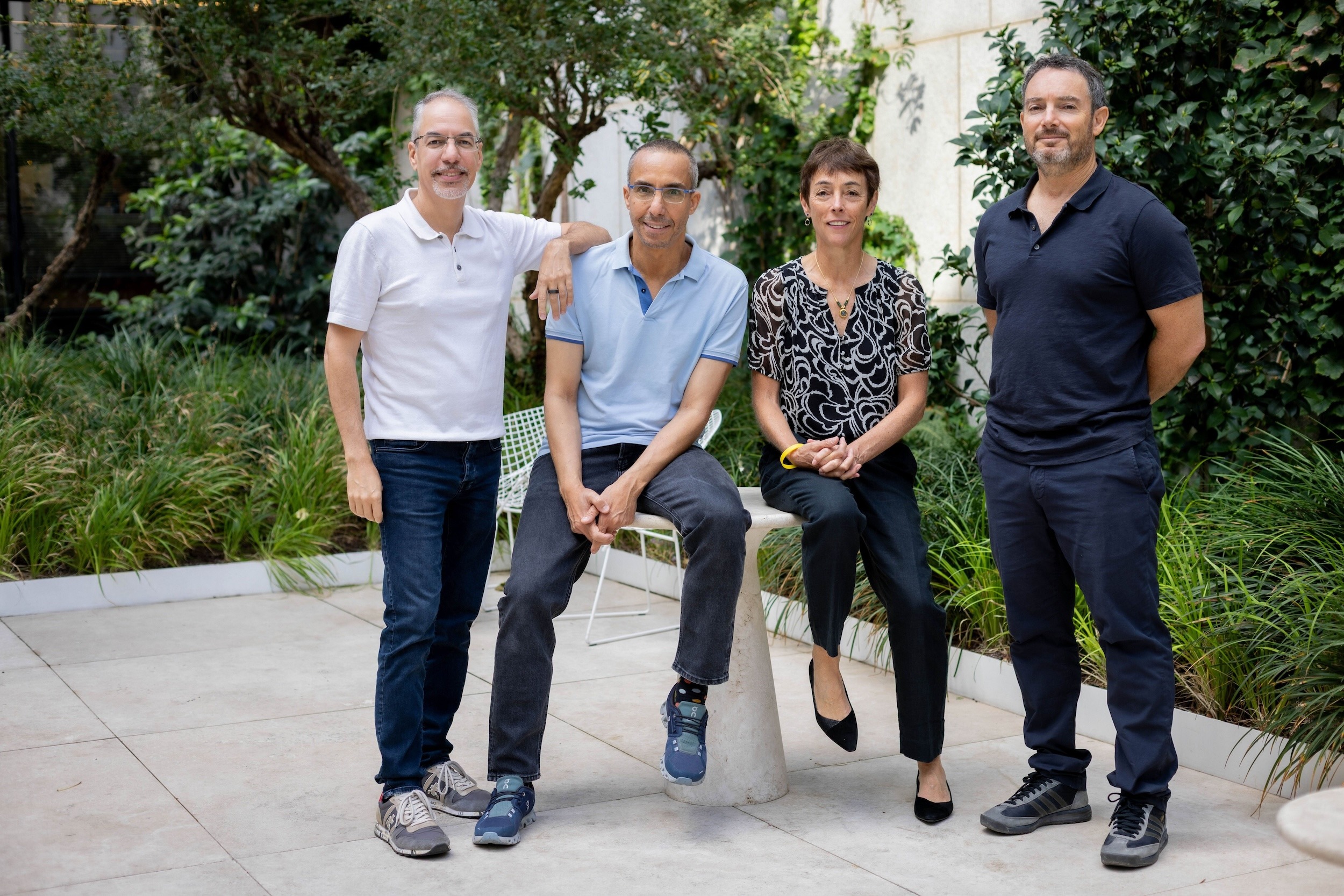 83North is a global venture capital firm with over $2 billion under management, investing in European and Israeli entrepreneurs to build global businesses. Founded in 2006 and formerly known as Greylock IL, the firm has invested in 90 companies, achieving 33 exits, including 14 unicorns. Their portfolio spans various sectors, including fintech, mobility, healthtech, marketplaces, SaaS, and security.
83North's investment approach focuses on early-stage and growth capital investments, typically committing between €1.5 million and €3 million per investment, primarily in Series A and B funding rounds. The firm operates from offices in London and Tel Aviv, providing support across Europe, Israel, and the United States. Notable portfolio companies include IronSource, iZettle (acquired by PayPal), Just Eat, Wolt, and Via Transportation. |
 Convexa is a venture capital firm specializing in investments from early stage to initial public offering or trade sale. The firm invests in early stage, growth stage, expansion, seed and venture stages. The firm prefers to invest in internet/digital technologies, information technology & telecom enabling technologies, oil & gas technologies, solar, materials technology, semiconductor technologies, agricultural technologies, and energy technologies. In internet/digital technologies the firm firm prefers to invest in consumer and enterprise. Within solar energy sector, the firm seeks to invest in crystalline si, thin film, concentrator PV, nano-materials, silicon ink, next generation, cleantech; food, water, energy, waste and transportation, materials technology applied in cleantech, and energy storage. Within oil & gas sector, it focuses on exploration, innovative drilling, intervention and work over methods, and enhanced recovery. Within information technology/telecom enabling technologies, it seeks to invest in enabling platforms, software, software services, cloud and web services, integration technology, search technology, wireless and value added telecom software services.The firm also invests in metallization paste technology, nano-silicon anode material for batteries, gallium layer transfer technology, internet, technology for handling of toxic materials and high-tech hydroponic farming/organic food and geopolymer technology. The firm seeks to invest in companies based in Scandinavia, Nordics, The United States, Florida and Silicon Valley. In Europe, the firm invests in firms having a Norwegian origin. It prefers to exit its investments between two and six years through merger, strategic sale, trade sale, or initial public offering. The firm seeks to take a board seat in its portfolio companies. Convexa was founded in 2000 and is based in Oslo, Norway with an additional office in Palo Alto, California. |
 Lira VC is a venture capital firm specializing in angel investments and investments in incubation, seed stage, startups, and early stage companies. The firm seeks to invest in Atlanta. It also offers micro loans between $5,000 and $100,000. It also provides business incubator space, including basic bookkeeping, marketing, website/SEO, transportation, high-speed Internet access, office space with furniture, office equipment, networking opportunities as well as mentoring and guidance. The firm prefers to invest in convertible debt or have an ownership equity in the company. Lira VC is based in Atlanta, Georgia. |
 RedBlue is a venture capital firm specializing in investing in early stage mobility startups. It seeks to invest in transportation, logistics and energy-transition sectors. It seeks to invest globally. The firm is based in the United States. |
 AIP, LLC is a private equity firm specializing in investments in turnarounds; leveraged buyouts; management buyouts; corporate divestitures, PIPES, structured preferred equity investments; recapitalizations; equity bridging transactions; strategic add-on acquisitions; going-private transactions; debt with warrants; carve-outs; international expansion; re-financings; project management and finance; public equity and Canadian income trust offerings in middle-market and mature companies. The firm primarily invests in industrial services and manufacturing companies that are primarily engaged in selling to other businesses and have business-to-business selling relationships. It prefers to invest in industrials, Information Technology, and materials sectors. Within industrials, the firm focuses on commercial services and supplies, automotive, building products, capital goods, machinery, electrical equipment, commercial services and supplies, aerospace and defense, office services and supplies, industrial machinery, heavy electrical equipment, commercial printing, aerospace and defense, office furnishings and equipment, pumps and pumping equipment, industrial heating, industrial technology, logistics, transportation, ventilation, air conditioning, and refrigeration equipment and supplies, power generation equipment, office products, industrial air conditioning and cooling equipment, engines and turbines, air and gas compressors, transmission and distribution equipment, power transformers, and industrial fans and blowers. Within Information Technology sector, it prefers to invest in electronic equipment and instruments, electronic equipment manufacturers, electronic manufacturing services, security, control, surveillance and detection equipment, and electronics manufacturing equipment. Within materials, the firm focuses on chemicals, metals and mining, construction materials, containers and packaging, aluminum, diversified metals and mining, construction materials, fabricated structural metal products. The firm primarily invests in privately or publicly held companies based in North America with a focus on the U.S., Mexico, and Canada, serving domestic and global markets. It makes equity investment between $10 million and $150 million with additional amounts available from investment partners. The firm invests in companies with EBITDA between zero or negative up to $350 million; enterprise values between $50 million and $2000 million; sales greater than $500 million and acquisition values between $50 million and $500 million. The firm prefers control or material governance rights in its portfolio companies. American Industrial Partners was founded in 1989 and is based in New York, New York. |
 GE Equity is a venture capital and private equity arm of GE Capital US Holdings, Inc. specializing in direct and fund of funds investments. For direct investments, the firm invests in growth equity financing with a focus on merger, acquisition, buyout and expansion finance; IPO financing; buyouts co-investments; late venture; special situations/turnarounds; secondary direct purchases; and recapitalizations. It seeks to invest in private company acquisitions, expansion capital, corporate partnerships, public to private acquisitions, platform buildups/ industry consolidations, and leveraged buyouts. It invests in mature middle market companies and in companies with differentiated technology. The firm typically invests through preferred stock, common stock, convertible stock, and warrants as equity structures. For fund of fund investments, the firm invests in limited partner investments in private equity funds. It invests in aerospace, aviation, industrial, consumer, clean technology, communications, advanced manufacturing, and transmission and distribution, energy, financial services, food, beverages, agriculture, software, information technology, entertainment, rail, enterprise solutions, business services, healthcare, information technology healthcare providers, medical technology, pharmaceuticals, media, satellites, oil and gas, infrastructure, security, sensing technology, transportation, and water. The firm seeks to invest in companies based in Asia including South East Asia and Asia Pacific region such as China, Hong Kong, Taiwan, India, Japan, Australia, Europe focusing on Spain, Latin America, Middle East, Africa, and North America. The firm invests between $1 million and $15 million with the capability to invest larger amounts. It make buyout investments and co-investments in companies with over 10% EBITDA margins and EBITDA of more than $35 million and growth capital investments in companies with more than $35 million as revenue. It seeks co-investments in sponsor-led transactions; equity investments in GE-agented debt facilities; and limited partnership positions in private equity funds. The firm seeks to invest in nonperforming loans. The firm seeks to take a minority ownership positions in established companies with high growth potential. It prefers to source its investments from private equity sponsors, intermediary, investment banks, and direct corporate investments. GE Equity was founded in 1995 and is based in Norwalk, Connecticut with offices across the United States, Europe, South America, Australia, and Asia. |
 Wapinvest is an investment firm specializing in direct and secondary direct investments. For direct investments, the firm specializes in venture debt, incubation, start-up, early, middle, late venture, growth capital, and emerging growth. The firm does not invest in finance, agriculture, fisheries, aquaculture, steel, shipbuilding, synthetic fibers, transportation, retail and the automotive sector. The firm seeks to invest in small and medium sized companies in the region Wallonie Picarde, Belgium. It generally invests up to €1.25 million ($1.87 million) in equity and invests in companies with maximum debt investment values of €2 million ($2.71 million). The firm seeks to invest in. It prefers to take a minority stake and a seat on the Board of Directors. The firm generally seeks to exit via a management buy-out. Wapinvest was founded in 1988 and is based in Tournai, Belgium. |
We invest to grow cutting edge technologies for future of transportation.
Driventure is the venture capital arm of Ford Otosan that focuses on seed and early-stage startups in the auto-tech sector. |
 GE Energy Financial Services is a private equity and venture capital arm of General Electric Co. specializing in investments in growth capital, bridge financing, acquisition, buyout, and recapitalization. It prefers to make mid venture, late stage, emerging growth, middle market, and mature transactions. The firm also provides project debt transaction, asset backed revolvers, and leveraged leases. It invests across the capital spectrum in the form of structured, common and second and third stage venture equity and private equity, debt products such as: leases, debt financing, preferred limited partnerships, limited partnerships, and project equity and finance. Within debt, the firm provides project, working capital, acquisitions, and capital expenditure financings to energy companies around the world. It provides structured project finance using debt and equity and also construction loans, lease financing, funding for late stage project development efforts, and venture capital for businesses. It typically invests in natural resources from its exploration, production, transportation, consumption; power generation, transmission, and distribution, vehicle fueling, oil and gas reserves and infrastructure, water, telephone and communications equipment repair, renewable energy, pipelines and storage, refining and distribution systems. Within water, the firm seeks to provide equity and customized debt finance for existing assets and projects under development in the commercial, industrial, and government infrastructure markets. It typically invests in water treatment, reuse, desalination, waste water treatment, and water transmission projects and assets globally. For renewable energy, the firm invests in wind, solar, hydro, and thermal power. Within private equity, the firm prefers to makes equity investment in private companies in energy technologies and services sector. Within coal, the firm provides tailored financial solutions like equipment leases and loans, senior secured debt, recapitalization, or acquisition financings. The firm primarily invests in Europe, North America, Latin America, Middle East, Australia, India, Southeast Asia-Pacific, Sub-Saharan Africa, North Africa and China. It invests up to $5 million in each company and can also consider larger amounts. It invests a combination of equity and debt investments, from $25 million to $200 million per company. It seeks to lead transaction of $20 million or more. It provides lease financing for a variety of capital equipment utilized in the energy industry. The firm can provide 100 percent financing using a single investor or leverage lease structure. It prefers to invest common equity alone or co-invest in a wide variety of energy assets and projects. In venture investing, the firm makes minority or majority equity investments in private companies. It also makes selective investments in also publicly traded companies. GE Energy Financial Services was founded in 1980 and is based in Stamford, Connecticut with additional offices in Vancouver, Canada; Sydney, Australia; Singapore; New York, New York; Montreal, Canada; Los Angeles, California; London, United Kingdom; Houston, Texas; Gurgaon, India; Chicago, Illinois; Calgary, Canada; Nairobi, Kenya and Hong Kong. |
 Analog Ventures is an early-stage venture capital firm that leads the first rounds for startups building in foundational industries like healthcare, financial services, transportation, and energy. They focus on being the 'first check' and providing hands-on support through customer introductions and recruiting. |
 L2 Capital Partners, L.P. is a private equity firm specializing in investments in lower middle market, development stage, growth capital, buyout, recapitalization, and industry consolidation. The firm does not invest in highly distressed situations. It seeks to invest in growing or underperforming companies in the manufacturing, distribution, and service sectors. It also seeks investments in technology enabled services, business services, e-commerce, direct marketing, consumer products, manufacturing, environmental products, energy, metals and mining, commercial services and supplies, transportation infrastructure, auto components, household durables, leisure equipment and products, diversified financials, hotels, restaurants and leisure, retailing, food and staples retailing, household products, personal products, life sciences, biotechnology, pharmaceuticals, financials, software, telecommunication services, and utilities. It prefers to invest in North America. It seeks to invest up to $15 million per transaction in companies with revenues between $15 million and $150 million, enterprise value up to $150 million and an EBITDA $4 million to $15 million with an average deal size between $10 million and $20 million. It prefers controlling or majority investments in the companies. It firm seeks an active participation on the boards of its portfolio companies. L2 Capital Partners, L.P. was founded in 2011 and is based Devon, Pennsylvania with additional offices in Miami, Florida and Jacksonville, Florida |
 Rayn Group is a Venture Capital firm specializing in startup investments. The firm prefers to invest in technology sector. The firm focus on Fintech, Edtech, E-Commerce and Transportation sector. The firm invest globally. Rayn Group was founded in 2020 and is based in Singapore. |
 We specialize in early-stage startup investments, operating in sectors such as artificial intelligence, food technology, e-commerce, transportation, and fintech. We have invested in 90 companies founded in more than 10 countries, including the USA, Europe, India, and South-East Asia. Five of our early-stage investments have grown into multi-billion dollar public companies: Yandex, EPAM, Delivery Hero, RingCentral, and Datadog. Our offices are located in New York, London, and Bangalore. We have built our flexible approach and fast-paced decision making team around the needs of business founders because we understand what it takes to create market disruption. We know that exponential growth is possible when the right investor is matched with the right founder around the right idea. We admire founders who are ready for the short term sprints, the long term marathons and are prepared to work hard to be successful. We bring people power to your business. |
 Shift4Good is a venture capital firm dedicated to decarbonizing the transportation sector, which accounts for 20% of global CO2 emissions. As a large venture fund focused on sustainable mobility, they support entrepreneurs in sectors like maritime, robotics, and EV infrastructure to drive impactful change. |
 Founded in 2009, EIV Capital is a Houston-based private equity firm specializing in providing growth equity to the North American energy industry. EIV Capital focuses on midstream and related service businesses with an emphasis on energy infrastructure and businesses involved in the processing, transportation, storage, or conversion of oil, natural gas, refined products and renewable fuels. The firm’s management has extensive experience leading and investing in companies across the energy value chain. |
 F+ Ventures is the corporate venture arm of Fark Holding dedicated to evaluating and investing in technologies and business model innovations that are transforming our transportation systems. We support “A Teams" by helping with customer acquisition and smart capital. |
 M3G Capital is a private equity firm specializing in middle market, buyout, recapitalization investments. The firm focuses on technology, vertical software of healthcare, insurance, HR/benefits, education/non-for-profit, government, telematics/transportation, compliance software and/or services, revenue cycle management, pharma services and life science tools, Pharmacy and specialty distribution, cost containment/benefit management, contract management, packaging, and/or distribution, dental and pet products/services sectors. The firm typically invests in California with major focus on Northern California. The firm prefers to invest in companies with sales values of minimum $5 million. The firm prefers to take minority stakes typically in technology or tech-enabled service businesses. M3G Capital is based in The United States. |
Understanding Transportation investors
What are Transportation investors, and what do they look for?
Transport investors separate moving people from moving goods, and this category is the passenger side. That distinction matters because passenger transport is heavily regulated, frequently subsidised, and involves public authorities as customers, partners or licensors in ways that freight does not. Investors establish early whether you sell to operators, to authorities, or directly to travellers, since each has different procurement, pricing constraints and timelines. Utilisation is the metric that decides asset-based models. Vehicles, whether shared cars, bicycles, scooters or buses, earn only when they are moving with someone in them, and the difference between good and poor utilisation is the difference between a business and a subsidy. Investors examine trips per vehicle per day, revenue per vehicle and how both vary by city and season. Third, they assess regulatory dependence. Operating permits, licence conditions, parking arrangements and subsidy contracts can be granted and withdrawn by municipalities, and companies whose economics rely on favourable terms in a handful of cities carry political risk that investors will price accordingly.
Why Transportation is attracting investor interest
Cities changed their policy priorities faster than their infrastructure, which created both the opportunity and the friction. European municipalities have committed to reducing private car use, improving air quality and reallocating street space, and those commitments require alternatives that mostly do not exist yet at adequate quality. That produces genuine demand and a procurement environment shaped by political timelines. Public transport digitisation supplied steadier commercial ground than shared vehicles. Ticketing, scheduling, demand-responsive services and passenger information are bought by operators and authorities with real budgets and long contracts, and the businesses are considerably less capital-intensive than fleet operations. Electrification of buses and commercial fleets became a substantial procurement programme across European cities, creating demand for vehicles, charging infrastructure, depot management and financing structures. The shared mobility correction has been instructive. Heavy capital deployment into shared vehicle fleets produced losses at scale, and investors emerging from that are focused on utilisation and unit economics rather than on city counts, with a marked preference for asset-light models serving operators over operators themselves.
Which funding stages Transportation investors are active at
Funding depends heavily on whether the business owns vehicles. Software and services businesses serving operators and authorities follow enterprise stages, with Series A requiring contracts won through procurement rather than pilots, and later rounds turning on renewals and expansion across authorities. Fleet operators face a different structure entirely. Vehicles are financed with asset finance and leasing rather than equity, and investors assess whether that stack is arranged. Equity funds the operating company and the expansion capability, and companies that funded fleets from equity in the previous cycle diluted heavily for assets a lender would have financed. Public procurement dominates the authority-facing segment, with the long cycles, framework agreements and payment terms that implies. Working capital facilities matter accordingly. Later-stage capital comes from infrastructure funds, transport operators and public institutions rather than from generalist venture, which means the investors who fund expansion are rarely the ones who funded the early rounds. Strategic acquirers include large mobility operators, vehicle manufacturers and public transport groups, all of which have bought capability in this sector rather than building it.
Typical check and round sizes in Transportation
Sector averages would blend a ticketing software company with a fleet operator, whose capital profiles have nothing in common. The structural discipline is to keep vehicle finance separate from company equity in every document. Fleets should be financed with asset finance, leasing or dedicated vehicle facilities against the vehicles themselves, and investors who understand the sector will make that separation regardless of how the plan is presented. City-by-city economics deserve individual modelling rather than an aggregate. Utilisation, regulatory terms, competition and seasonality vary enormously between European cities, and a portfolio average conceals whether any individual market actually works. Investors ask for the best and worst city separately. For authority-facing businesses, procurement timelines and payment terms determine working capital needs more than growth does, and companies that modelled commercial sales cycles run short. Seasonality is pronounced in shared mobility, with winter utilisation in northern European cities falling to a fraction of summer levels, and rounds sized without accounting for it fall short in the first quarter. For comparables, use recent European rounds from companies with the same asset model and customer type.
Types of investors active in Transportation
Investors who model city-level unit economics rather than aggregates and understand how much regulatory terms vary between municipalities. They are unsentimental about shared fleet economics after the previous cycle and focused on utilisation above growth.
Corporate investors from bus, rail and multimodal operators who hold the contracts and passenger relationships. They can become customers as well as shareholders, and their procurement access is difficult to replicate independently.
Investment arms of vehicle and equipment makers seeking positions in mobility services. They bring vehicles, financing structures and maintenance networks, which addresses several constraints simultaneously.
Lenders and leasing providers funding vehicles against the assets themselves. Structurally necessary for any fleet business, since equity is a ruinous way to finance depreciating vehicles.
Capital financing transport assets and long-term operating concessions against contracted revenue. They underwrite availability and contracted cash flows rather than growth, and engage once operations are proven.
European and national programmes supporting fleet electrification, public transport modernisation and urban mobility. Substantial, frequently paid to the operator or authority rather than the supplier, which shortens sales cycles.
What Transportation investors look for in diligence
Transport diligence works city by city and follows the assets. Unit economics are examined per city rather than in aggregate. Investors want trips per vehicle per day, revenue per trip, operating cost including maintenance, redistribution and charging, and contribution margin for the best and worst markets separately. Portfolio averages that conceal loss-making cities are identified quickly. Utilisation seasonality is modelled, since northern European winter demand for shared vehicles falls substantially and companies that presented summer figures have been caught by it. Vehicle lifecycle is assessed, covering how long units last in service, maintenance cost over life, damage and theft rates, and residual value. These figures determine whether the depreciation assumptions in the model hold. Regulatory position is verified per city: permit terms, duration, fleet caps, parking arrangements and what happens at renewal. Concentration in a small number of favourable jurisdictions is treated as a real risk. For authority-facing businesses, contract terms are reviewed including duration, renewal mechanics, performance obligations and payment schedules, since public transport contracts run long and their terms determine the value of the business. Safety records and incident handling are examined for anything carrying passengers, since a serious incident can end operating permission.
How to build a fundraising strategy as a Transportation startup
Present city-level economics with your weakest market included. Investors will ask for it, and volunteering the range demonstrates that you manage the business at the level where it is actually decided rather than reporting a flattering average. Finance vehicles with asset finance rather than equity. This single structural decision determines how much of the company founders retain, and lenders exist specifically for depreciating transport assets. Secure regulatory terms with duration where you can. A permit renewable annually at a municipality's discretion is a weaker asset than a multi-year concession, and investors value the difference substantially. Consider serving operators rather than becoming one. Software and services sold to transport operators and authorities reach profitability far earlier than fleet operations, and after the shared mobility correction, European investors are considerably more receptive to that model. Model seasonality explicitly and raise to cover the trough. Companies that raised on summer performance and encountered a northern European winter have found the gap larger than planned. Engage public procurement early if authorities are your customer, since frameworks and tenders take longer than commercial cycles and being absent from a framework excludes you from the budget entirely.
Common mistakes founders make raising Transportation capital
Presenting aggregate city economics that conceal loss-making markets is the sector's characteristic evasion, and investors ask for the individual breakdown as a matter of routine. Funding fleets from equity is the structural error that defined the previous cycle, diluting founders for assets that depreciate and that specialist lenders would readily finance. Expanding into new cities before any city is profitable repeats the mistake most visibly punished in shared mobility, where market count was treated as progress while unit economics never worked anywhere. Underestimating vehicle damage, theft and maintenance produces depreciation assumptions that fail in practice, and these costs vary considerably between cities in ways that surprise operators entering new markets. Building economics around favourable regulatory terms that a municipality can change leaves the business exposed to a political decision, and several European cities have altered permit conditions abruptly. Ignoring seasonality in northern markets produces cash planning that fails in the first winter, which is entirely predictable and repeatedly overlooked.
How Transportation investment differs across Europe
The Nordics have advanced public transport digitisation and strong municipal commitment to reducing car use, alongside severe winter seasonality that shapes shared mobility economics considerably. Germany combines a large public transport sector with substantial municipal authority over mobility policy, meaning procurement runs city by city and national scale requires many separate relationships. France has significant public transport operators with international reach and a centralised approach to some mobility policy, alongside active public funding for urban mobility transition. The Netherlands and Denmark have cycling infrastructure and mode shares that exist almost nowhere else, which makes them natural markets for cycling-related products and unrepresentative as tests of general mobility demand. Spain and Italy have large urban populations with high scooter and motorcycle use, favourable weather for shared micromobility and municipal regimes that have varied considerably in their receptiveness. The UK has substantial private operators in bus and rail alongside significant public procurement, with regulatory approaches to micromobility that have differed from the continent. Central and Eastern Europe has strong public transport usage inherited from earlier planning, with modernisation programmes supported by European funding creating procurement opportunities in ticketing, fleet and infrastructure.
Ready to reach Transportation investors?
Create a free CapLink account to unlock full investor profiles, contact details, ticket sizes and intelligent matching.