Web3 Investors
Web3 is one of the most actively funded categories on CapLink, with 145 verified investors currently backing companies in the space.
The mix is led by VC, Incubator, Accelerator and Business Angel, alongside 5 other investor types. Deal coverage spans Pre-Seed through PE/Buy-out, with the largest concentration at Seed.
Investor headquarters cluster in Canada, United States, France, Germany and Spain, with activity across 194 countries in total. Ticket sizes range from roughly $5K to $50M, covering early angel cheques through to growth-stage rounds.
Use the pre-filtered database below to explore every Web3 investor on CapLink, or sign up to unlock contact details, ticket sizes and detailed investment criteria.
Web3 investor database
145 investors matched for Web3. Sign up to unlock contact details and full profiles.
| Investor |
|---|
 Web3 X is venture capital firm specializing in incubation, startups, early-stage, pre-seed and seed investments. The firm prefers to invest in Web3, especially those building in DeFi, GameFi, SocialFi, blockchain technology, decentralized platforms, RWA and infrastructure sector. It focuses to invest in APAC region. The firm invest up to $0.10 million in companies. Web3 X was founded in 2023 and is based in Hessen, Germany. |
 We accelerate web3 startups that deeply care about privacy, trust and governance verticals. |
 We invest in Fintech, IoT, web3, SaaS, B2B, Latam, Consumer, Health. |
 We invest in Western companies building solutions to connect enterprise companies with the opportunities presented by Web3 & AI. |
 gmjp is a venture capital firm specializing in an early-stage web3 fund. The company primarily invests in fintech and blockchain technoloy sectors. The firm seeks to invest globally in the web3 sector with a focus on Japan. gmjp is was founded in 2022 and is headquartered in Tokyo, Japan. |
 TRAC is a quantitative venture capital firm founded in 2020 by Fred Campbell, Joe Aaron, Steve Marek, and Scott Pyne. Based in Sonoma, California, TRAC leverages AI-driven algorithms to identify promising startups with high potential for success. The firm has made over 100 investments across various sectors, including Spacetech, AI/ML, B2B hardware/software, B2C, Robotics, Dir2Con, Edtech, Fintech, HR Tech, Media, MedTech, Gaming, and Web3. |
 We invest in early-stage web3/blockchain/crypto projects that build on top of established DeFi ecosystems and help guide them toward decentralization. |
 We invest in innovative internet companies (Web3, Blockchain, Consumer, VR, games) |
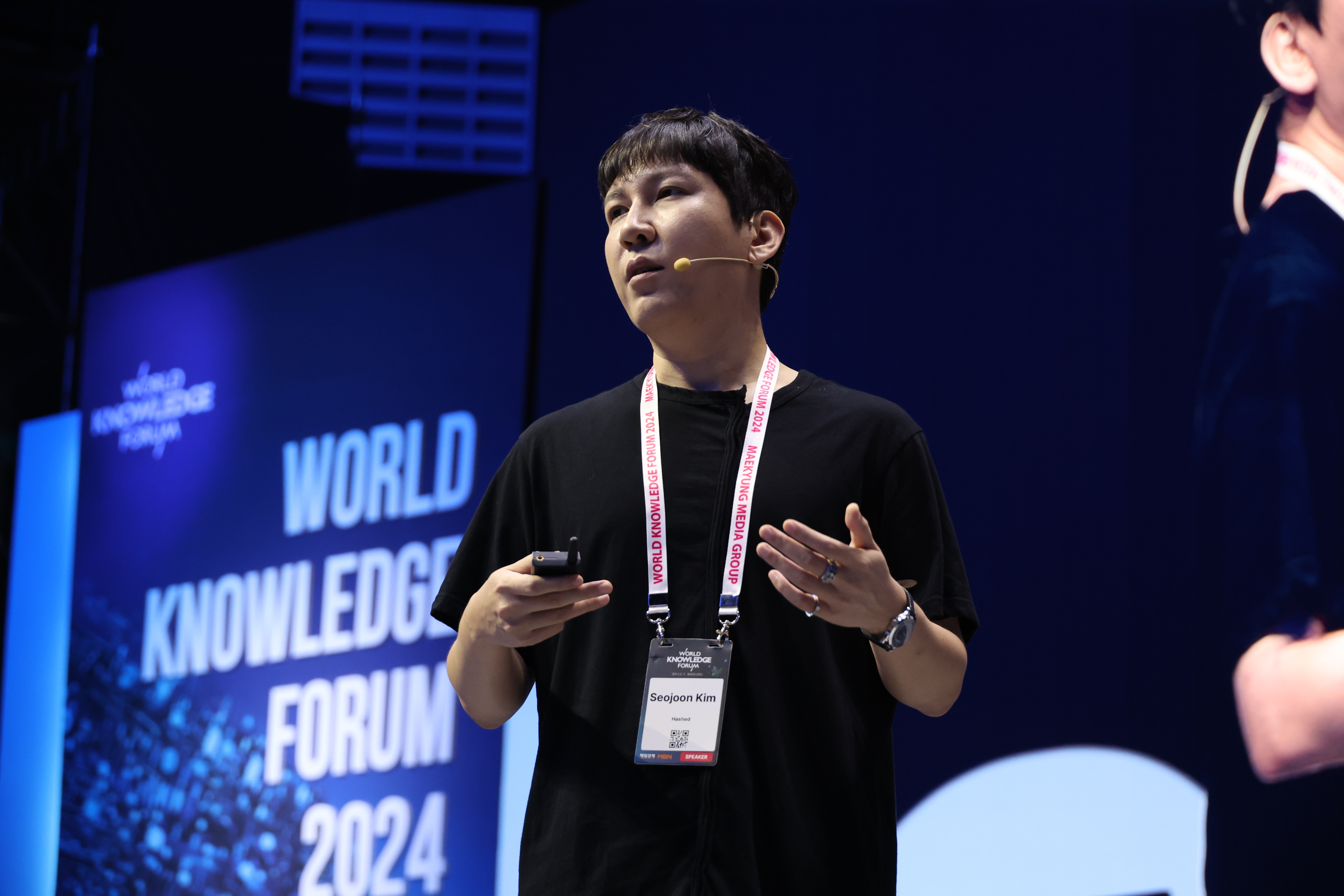 Hashed is a global team of blockchain experts and builders based in Seoul, Singapore, Bengaluru, Silicon Valley, and Abu Dhabi. They partner with entrepreneurs innovating on blockchain and Web3, providing ecosystem support through subsidiaries like Hashed Emergent and UNOPND, and co-hosting major events like Korea Blockchain Week. |
 Blocore is a Web3-focused investment firm and builder that specializes in gaming, social, IP, and technology through in-house projects, joint ventures, and post-investment management. |
Variant is an early-stage fund investing in web3.We believe the next generation of the internet will transform users into owners.We back mission-aligned founders at the earliest possible stage. |
 w3.fund is a Next Gen Investment House featuring a content & community-driven VC (w3.ventures) focusing on pre-seed and seed Web3 startups, and a liquid token fund (w3.wave). |
 We invest in web3, fintech, industry 4.0, SaaS, ESG |
CoinFund is a New York-based investment firm founded in 2015, specializing in blockchain and Web3 technologies. The firm focuses on early-stage investments in decentralized networks, cryptocurrency, and frontier innovation technologies. CoinFund combines deep technological expertise with active company building and a robust investment process to drive success in the Web3 space.
The team comprises professionals with backgrounds in technology, computer science, law, economics, finance, and quantitative research. CoinFund has supported over 100 companies across six investment vehicles, emphasizing its commitment to advancing the blockchain ecosystem. |
We accelerate early stage startups in blockchain, crypto, and web3 sectors that are nearly MVP-ready, by providing services around tech development, marketing & community building, token design and tokenomics, fundraising / investor connection, and token sale via our launchpad. |
 Paradigm is a research-driven venture capital firm specializing in the cryptocurrency and blockchain sectors. Founded in 2018 by Fred Ehrsam, co-founder of Coinbase, and Matt Huang, former partner at Sequoia Capital, Paradigm focuses on supporting innovative crypto/Web3 companies and protocols from their earliest stages. The firm employs a flexible, long-term, multi-stage, and global investment approach, often engaging with projects at inception and providing ongoing support as they evolve.
Paradigm's hands-on involvement spans technical aspects such as mechanism design, smart contract security, and engineering, as well as operational areas like recruiting and regulatory strategy. The firm's portfolio includes notable investments in companies like Uniswap, FTX, BlockFi, Maker, and Sky Mavis. In June 2024, Paradigm raised $850 million for its third fund, dedicated to early-stage crypto projects, underscoring its commitment to advancing the cryptocurrency industry.
Additionally, Paradigm launched the Policy Lab in September 2023, a platform aimed at producing research and advocacy on critical policy issues affecting the crypto ecosystem. |
 We invest in Saas, fintech, healthtech, web3 |
 Triblock is a Web3 investment and advisory firm specializing in business development, company formation, liquidity management, market insights, and strategic planning. They focus on founder-first pre-seed and seed-stage ventures across tokens and equity, partnering with visionary startups aiming to disrupt trillion-dollar incumbent industries. Their portfolio includes companies like Stardust, Oncyber, Ondo Finance, Stader Labs, Aurory, Metaplex, The Tie, Nomad, Li.Fi, Pine Street Labs, Socol, Milkomeda, Debridge Finance, Mavia, Infinigods, Astaria, Petaverse, Banyan Computer, Metafabrix, and Swivel Finance. |
 We Invest in Web3 and Blockchain-based startups with commercially launched, early revenue |
I invest in, build, and contribute to web3 startups. Focus on technologies at the frontier. |
 YZi Labs is an investment vehicle fueling impact in Web3, AI, and biotech. |
 An investment firm focused on DeFi and Web3 |
ConsenSys is a blockchain software company founded in 2014 by Ethereum co-founder Joseph Lubin. Based in Brooklyn, New York, the company specializes in developing infrastructure and decentralized applications (dApps) for the Ethereum blockchain. ConsenSys has been instrumental in creating some of the most widely used Ethereum applications, including the MetaMask wallet, the uPort identity tool, the Gnosis prediction market, and Infura, a service that provides scalable infrastructure for Ethereum applications.
The company operates through several branches: ConsenSys Labs, an accelerator and venture arm supporting early-stage blockchain projects; ConsenSys Academy, offering online courses for blockchain development; ConsenSys Solutions, collaborating with businesses to build blockchain-based solutions; and ConsenSys Diligence, providing security, legal, and technical guidance to protect the Ethereum ecosystem. In 2017, ConsenSys launched ConsenSys Labs, a $50 million blockchain venture fund aimed at supporting founders in the space by providing capital and networking opportunities. The company has also partnered with Microsoft to build dApps in Microsoft's Visual Studio programming platform and with Hyperledger to launch Codefi, a suite for decentralized finance solutions.
In August 2020, ConsenSys acquired Quorum®, an enterprise variant of the Ethereum blockchain developed by J.P. Morgan, enhancing its enterprise blockchain offerings. In February 2023, ConsenSys acquired Hal, a platform that provides blockchain notifications, to strengthen its Web3 development capabilities. |
Fusion LA is a venture capital firm specializes in startup, growth capital and pre-seed platform. The firm seeks to invest in Enterprise Software, Education, Clean Energy, Future of Work, Real Estate, Proptech & Mobility, AI & ML, AR & VR, Climate & Energy, Consumer, Crypto & Web3, Digital Health & Wellness, E-Commerce & CPG, Fintech & Insurance, Food & Agriculture, Future of Work & HR, Gaming & Esports, Healthcare & Life Science, IT, Cloud & Communication, IoT & Electronics, Legal Tech, Marketing & Adtech, Marketplace, Mobile, Mobility & Automotive, SaaS, Sales & CRM, Security and Supply Chain & Logistics. It seeks to invest across Israel and the US. It seeks to invest in $0.15 million in equity investments. Fusion LA was founded in 2017 and is based in United States. |
 K5 Global is a venture capital firm and incubation studio founded in 2018 by Michael Kives and Bryan Baum. The firm is dedicated to supporting founders throughout the entire business lifecycle, from inception to IPO. With a mission to back category-defining companies, K5 Global has deployed over $1 billion in capital across various funding stages.
The firm focuses on helping innovative companies expand their networks and strategically positions them to achieve their growth targets. K5 Global's diverse portfolio includes notable investments in groundbreaking companies such as SpaceX, Relativity Space, xAI, GDS, Koloma, The Boring Company, Firebolt, SumUp, Grafana Labs, Lightning AI, Anduril, and Product Science. These investments reflect K5 Global's commitment to fostering innovation across various sectors.
In addition to investing, K5 Global has launched several companies, demonstrating their hands-on approach to incubation. Notable examples include 818 Tequila, an award-winning, hand-crafted tequila brand produced using traditional methods in Jalisco, Mexico, and Sprinter, a bold and juicy ready-to-drink vodka soda made with real fruit juice, premium vodka, and sparkling water. Geographically, K5 Global is based in Los Angeles, California, and primarily invests within the United States.
The firm functions as a venture capital firm and incubator, connecting influencers and celebrities to entrepreneurs and brands, and incubating global business opportunities with A-list talent. Their investment size typically ranges from $500,000 to $3 million, focusing on sectors such as Web3/Crypto, communications and information technology, business services, and life sciences & healthcare. |


Understanding Web3 investors
What are Web3 investors, and what do they look for?
The question separating fundable Web3 companies from the rest is whether decentralisation solves a problem the customer actually has. Investors have seen a great many products where distributed architecture added cost, latency and complexity while delivering a benefit nobody asked for. What persuades is a specific reason the application needs to work without a trusted operator: censorship resistance, verifiable scarcity, interoperability across parties who will not trust a single intermediary, or ownership that survives the operator disappearing. User experience is the second and most persistent obstacle. Products requiring wallets, seed phrases and transaction signing have adoption ceilings that no amount of capital has overcome. Investors look closely at whether the complexity has been abstracted away, and companies that have made the underlying mechanics invisible are treated far more seriously than those expecting users to adapt. The third question is where value accrues. In many designs the protocol captures value and the company building it does not, or a token holds value that equity shareholders never see. Investors want the relationship between company, protocol and token stated plainly, because ambiguity there is a governance problem rather than a detail.
Why Web3 is attracting investor interest
Ownership models are the durable idea beneath a decade of noise. The ability to represent an asset, a membership or a right in a form the holder controls, transfers and carries between applications is genuinely new, and it has clear applications in gaming, digital media, ticketing, loyalty and credentials where issuers currently trap value inside their own systems. Infrastructure improved enough to make consumer applications plausible. Transaction costs fell substantially on newer networks, settlement times shortened, and account abstraction removed some of the interface friction that made early products unusable for anyone outside the enthusiast community. European regulation supplied unexpected clarity. Rules covering crypto-asset issuance and services gave companies defined categories to operate within, which matters more for consumer applications than founders sometimes expect, since distribution partners and payment providers ask about compliance before they will work with you. Investor sentiment remains selective. The speculative cycle drew in capital that has since departed, and what remains is directed at applications where the technology addresses a specific need rather than at general platforms waiting for developers to arrive.
Which funding stages Web3 investors are active at
Web3 funding patterns differ from conventional software because token structures interact with equity rounds. Seed capital typically funds a protocol or application to launch, sometimes through equity and sometimes through a token arrangement or a combination. Investors will want the structure clarified early, since a token that dilutes future equity value is a material fact. Series A requires genuine usage rather than activity generated by incentives. This is the sector's central diligence problem: distributing rewards produces transaction counts and wallet numbers that vanish when the rewards stop. Investors now discount incentivised metrics heavily and ask what happens when emissions decline. Series B and beyond depend on revenue the business actually captures. Many protocols generate substantial transaction value while the company behind them captures very little, and later-stage investors underwriting equity want a clear mechanism by which value reaches shareholders. Growth capital is thinner in Europe than during the previous cycle, and much of the sector's later-stage funding comes from crypto-native investors, sector specialists and treasuries rather than from generalist growth funds.
Typical check and round sizes in Web3
Numbers here would be misleading because funding structures vary so widely, and because the previous cycle's figures reflect market conditions that no longer apply. The structural question is how the company is capitalised relative to any token. Some businesses raise conventional equity and operate a protocol separately. Some raise through token sales, which brings regulatory obligations under European rules on crypto-asset issuance and complicates conventional equity diligence considerably. Some do both, and the interaction requires careful documentation. Investors evaluating equity want to know what the company owns, what revenue reaches it, and whether token holders have claims that affect shareholders. Founders who present this clearly avoid a great deal of friction; those who do not tend to lose institutional investors during legal review. Treasury management deserves planning. Companies holding digital assets face valuation volatility that affects reported position and runway, and investors expect a policy rather than improvisation. Public funding is largely unavailable in this sector compared with deeptech or climate, so plan on private capital. For comparables, look at recent European equity rounds from companies with similar structures rather than at headline token raises, which reflect a different instrument entirely.
Types of investors active in Web3
Investors who understand protocol design, token mechanics and community dynamics, and who can assess whether an architecture makes sense technically. They bring credibility with developer communities and are comfortable with structures that institutional funds find difficult.
Generalist consumer funds backing Web3 products where the technology is invisible to the user. They evaluate retention and engagement rather than protocol metrics, and they are the right audience for anything aiming at mainstream adoption.
Corporate investors from games publishing and media exploring digital ownership, item interoperability and direct audience relationships. They bring distribution to large existing audiences, which addresses the sector's hardest problem, and they are cautious about anything that reads as speculative to their players.
Investors backing the layers developers build on rather than end-user applications, evaluating adoption among builders and reliability under load. They apply infrastructure software logic and are largely indifferent to token narratives.
Protocol foundations and ecosystem funds distributing capital to projects building on their networks. Often the most accessible early funding, with the trade-off of alignment to one ecosystem and grant conditions that shape technical choices.
Funds with the legal capability to structure investments spanning equity and tokens under European rules. Their diligence is slower and their documentation heavier, and their participation makes a company considerably easier for conventional investors to join later.
What Web3 investors look for in diligence
Web3 diligence concentrates on separating genuine usage from incentivised activity, and investors have developed specific methods for it. Usage analysis strips out addresses and transactions attributable to reward programmes, airdrops and farming. Investors want activity from users who received no financial incentive, retention among those users over time, and what proportion of volume persists after an incentive programme ends. Value capture is examined structurally. What revenue does the company receive, through which mechanism, and is it contractual or dependent on governance decisions that others control? Protocols where fee switches require a vote the company cannot guarantee are treated cautiously. Token structure is reviewed in legal detail: classification under European rules, distribution schedule, vesting, what proportion is held by insiders, and what obligations attach to issuance. Undisclosed allocations discovered in diligence end processes. Smart contract security receives independent review, including audit history, whether findings were remediated, upgrade mechanisms and who holds administrative keys. Concentrated key control contradicts decentralisation claims and investors will note the inconsistency. Regulatory classification is assessed for the specific activity, since issuance, custody and exchange each carry different obligations under the European framework. Governance arrangements are checked for whether stated decentralisation matches actual control, because the gap between the two is frequently substantial.
How to build a fundraising strategy as a Web3 startup
Lead with the problem rather than the architecture. Investors have heard extensive descriptions of technical design and comparatively few clear explanations of why a user benefits from decentralisation. Opening with the user need and arriving at the architecture as the answer inverts the usual pitch and lands considerably better. Present usage with incentives stripped out. Volunteering the unincentivised numbers, even when they are smaller, builds credibility that inflated headline metrics destroy. Investors will perform this analysis regardless, so doing it first is strictly better. Make the value capture mechanism explicit. State what the company owns, what revenue it receives and how token holders and shareholders relate. Ambiguity here is the most common reason institutional investors withdraw during legal review. Abstract the complexity away from users. Products that require wallet management and transaction signing have repeatedly hit adoption ceilings, and demonstrating that ordinary users can complete the core action without understanding the underlying mechanics is among the strongest signals available. Address the European regulatory position directly, particularly if a token is involved. Distribution partners, payment providers and institutional investors all ask, and a considered answer distinguishes you from the majority who improvise one. Consider whether the token is necessary at all. Many companies in this sector would raise more easily and operate more simply without one, and founders who have genuinely examined the question tend to be more persuasive either way.
Common mistakes founders make raising Web3 capital
Presenting incentivised activity as organic demand is the sector's defining error, and investors now assume it is happening unless shown otherwise. Wallet counts and transaction volumes inflated by rewards are the first thing diligence strips out. Building decentralised infrastructure for a problem that does not require it produces a product that is slower, more expensive and harder to use than a conventional alternative. Investors ask what breaks if a normal database is used instead, and a founder without a sharp answer has usually not needed the architecture. Leaving the relationship between token and equity ambiguous kills institutional investment during legal review rather than at the pitch stage, which wastes months for everyone. Claiming decentralisation while retaining administrative control is a credibility problem that technical diligence exposes immediately. Investors do not necessarily object to centralised control; they object to it being misdescribed. Expecting users to learn wallet mechanics has failed consistently for a decade. Products that require this reach enthusiasts and stop there, regardless of the underlying quality. Designing around token price rather than product usage produces companies that optimise for market activity instead of customers, and the resulting business rarely survives a downturn in sentiment.
How Web3 investment differs across Europe
Switzerland has the deepest concentration of blockchain companies and foundations in Europe, supported by a legal framework that accommodated token structures earlier than most jurisdictions and by a cluster of specialist legal and technical advisers. Portugal and Spain have attracted substantial developer communities, helped by cost of living, favourable individual tax treatment in some periods and active local ecosystems, though institutional capital there remains limited. Germany has a strong technical developer base and early clarity on digital securities, which produced companies focused on tokenised financial instruments rather than consumer applications. France has combined an established registration regime with public support for blockchain development, producing a cluster of infrastructure and gaming companies with unusually strong regulatory positioning. The Netherlands and the Nordics have smaller but technically strong communities, with supervisors regarded as demanding, which has channelled activity towards compliance-conscious infrastructure rather than consumer speculation. Central and Eastern Europe, particularly Poland, Ukraine and the Baltics, supplies a substantial share of European blockchain engineering talent, and increasingly hosts companies rather than only development teams. The UK sits outside the European framework with its own approach, a large financial sector interested in tokenisation, and a supervisory stance that has restricted retail-facing activity more than institutional infrastructure.
Ready to reach Web3 investors?
Create a free CapLink account to unlock full investor profiles, contact details, ticket sizes and intelligent matching.